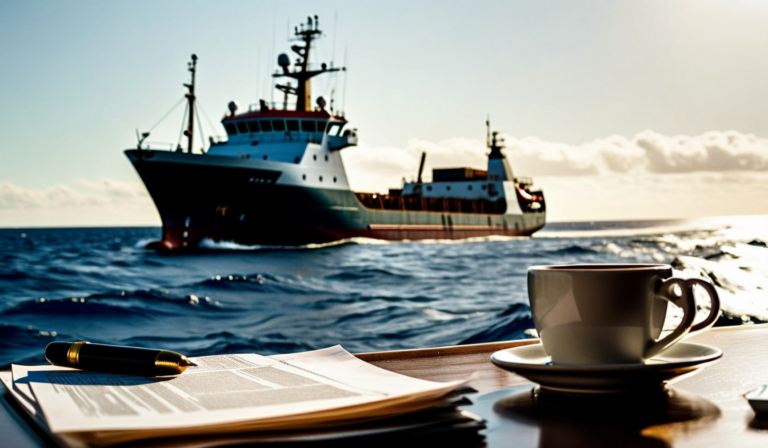
The Yara Birkeland, an autonomous electric container feeder vessel operating on the Norwegian coast, made international headlines when it began operations. It carries no crew. Its navigation decisions are made by onboard algorithms, supervised remotely from a shore-based operations center. It represents what the shipping industry calls a MASS — Maritime Autonomous Surface Ship — and while it remains exceptional today, the trajectory it represents is increasingly mainstream in maritime planning discussions.
The commercial case for autonomy is compelling in specific market segments. Short-sea shipping, coastal ferry routes, offshore supply operations, and port towage are all being actively targeted by autonomy developers, driven by the potential to reduce crewing costs (which account for 20 – 30% of vessel operating expenditure), eliminate human error (a factor in over 80% of maritime accidents according to IMO statistics), and enable around-the-clock operations without crew welfare constraints. The regulatory framework is evolving through IMO's Maritime Autonomous Surface Ships (MASS) code development, which is expected to produce binding international regulations by the mid-2020s.
The MASS Degrees of Autonomy
IMO defines four degrees of autonomy for MASS vessels, which provide a useful framework for understanding the current state of the technology. Degree 1 vessels have automated processes and decision support, with seafarers on board ready to take control — this describes most modern vessels with autopilot, electronic chart systems (ECDIS), and integrated navigation systems. Degree 2 vessels are remotely controlled with seafarers on board: the ship can be operated from a shore-based control center, but crew remains on board to handle local emergencies. Degree 3 vessels are remotely controlled without crew on board, relying entirely on remote operators. Degree 4 vessels are fully autonomous: the vessel makes its own decisions without human intervention.
Most current MASS operations are at Degrees 2 – 3, with Degree 4 remaining primarily in research and testing phases. The Yara Birkeland operates as a Degree 3 vessel with remote oversight from shore-based operators who can intervene if the onboard systems request guidance or if monitoring indicates an abnormal situation. This model — autonomous under normal conditions, with human oversight available for exceptions — is likely to dominate MASS deployment for the foreseeable future, because it balances the cost benefits of reduced crewing with the safety assurance that human judgment remains available for novel or ambiguous situations.
The regulatory challenge is that SOLAS was written assuming vessels have a master and officers on board. Requirements for watch-keeping, emergency response, cargo securing, pollution response, and dozens of other functions assume human presence. The IMO MASS code development process is working through these requirements systematically, but the pace of regulatory development inevitably lags behind technological capability. Operators pursuing MASS development today rely on flag state derogations, pilot project frameworks, and national coastal regulations that permit testing within domestic waters.
Monitoring Requirements for Autonomous Operations
The most profound implication of vessel autonomy for maritime monitoring platforms is not that monitoring becomes less important — it becomes dramatically more important and more demanding. When a human crew is aboard, hundreds of informal, continuous monitoring activities happen naturally: officers feel the motion of the vessel, hear changes in engine noise, observe other vessels visually, and make countless micro-adjustments to course and speed based on ambient awareness. Remove the crew, and all of this informal monitoring must be replaced by explicit sensor systems and algorithms.
An autonomous vessel requires comprehensive situational awareness systems that go far beyond the AIS and GNSS tracking that suffice for crewed vessel fleet management. The onboard sensor suite for a Degree 3 MASS vessel typically includes: multiple LIDAR and RADAR sensors for obstacle detection and COLREGS-compliant collision avoidance; high-resolution cameras with computer vision algorithms for visual identification of vessels, buoys, and navigation hazards; GNSS with integrity monitoring to detect spoofing and provide position accuracy assurance; and comprehensive machinery monitoring with automatic fault detection and response protocols. The data volumes generated by these systems are orders of magnitude larger than traditional vessel monitoring systems.
The shore-based operations center receives real-time video and sensor feeds from the vessel, monitoring a display that provides situational awareness equivalent to standing on the bridge. Operators typically oversee multiple vessels simultaneously — economic viability of the remotely controlled model depends on one operator supervising several vessels concurrently — which requires sophisticated alert prioritization systems that ensure critical situations are flagged without creating alert fatigue from the volume of normal status updates. Designing these human-machine interfaces is an active area of research, with insights borrowed from aviation, nuclear plant operations, and process control industries.
Cybersecurity: The New Safety-Critical Challenge
Autonomous vessels connected to shore by high-bandwidth satellite links introduce cybersecurity as a first-order safety concern in a way that crewed vessels do not. A successful cyberattack on a crewed vessel is serious — it may disable navigation or communication systems — but the crew remains available to apply physical and procedural countermeasures, navigate by traditional means, and make independent safety decisions. A successful attack on an autonomous vessel with no crew could potentially seize control of navigation systems, disable propulsion, or manipulate sensor data to cause collision.
IMO Resolution MSC-FAL.1/Circ.3 on Maritime Cyber Risk Management and the ISM Code requirements for cyber risk management address this at a regulatory level, but the specific attack surfaces created by autonomous operations — real-time remote control links, autonomous decision-making system software, and the vast sensor networks required for environmental awareness — require more specific security architecture than the existing framework contemplates. Network segmentation between safety-critical control systems and data reporting systems, hardware security modules for command authentication, and encrypted, authenticated control channels are among the defensive measures that MASS operators must implement.
GPS/GNSS spoofing deserves particular attention in the autonomous context. GNSS spoofing — broadcasting false signals that cause a receiver to compute an incorrect position — has been documented in numerous maritime incidents, particularly in the Black Sea and Persian Gulf. For a crewed vessel, an officer who notices the chart position doesn't match visual observations can recognize and correct for spoofing. For an autonomous vessel relying entirely on electronic positioning, sophisticated multi-constellation GNSS with spoofing detection algorithms, inertial navigation system backup, and visual odometry position confirmation are needed to maintain safe navigation in contested environments.
Data Opportunities Created by Autonomous Operations
While autonomous vessels present monitoring challenges, they also create data opportunities that are difficult or impossible to realize with crewed operations. Because everything on an autonomous vessel must be explicitly instrumented and monitored (since there's no crew to observe informally), autonomous vessels are among the best-instrumented platforms in the maritime industry. The continuous high-frequency sensor data generated provides an unprecedented research dataset for vessel performance modeling, sea state characterization, and machinery condition analysis.
Machine learning applications that require large, consistently-formatted training datasets benefit from autonomous vessel data particularly strongly. Ocean condition models trained on sensor arrays from dozens of autonomous vessels operating in the same sea areas will achieve accuracy levels impossible to reach with the relatively sparse data from crewed vessel noon reports. Similarly, machinery health models trained on the high-frequency sensor data from autonomous vessel engine rooms will produce predictive maintenance capabilities far superior to those trained on manual reading data.
The commercial intelligence value of autonomous vessel tracking data is also significant. A fleet of autonomous vessels operating on defined routes provides a precise, continuous record of actual traffic patterns, encounter frequencies, and route deviations that benefits all users of those waterways — port authorities, other vessel operators, and maritime safety organizations. The challenge is establishing data-sharing frameworks that allow the industry to benefit from this collective intelligence without creating competitive disadvantage for individual operators who contribute their data.
The Path Forward: Hybrid Fleets and Platform Evolution
For the foreseeable future, most commercial fleets will be hybrid: some traditionally crewed vessels, some reduced-crew vessels with enhanced automation, and potentially some autonomous units on specific routes. Managing this heterogeneous fleet requires monitoring platforms capable of handling fundamentally different operational models — the traditional daily noon report model for crewed deep-sea vessels, enhanced real-time monitoring for reduced-crew coastal vessels, and continuous high-frequency data streams from autonomous operations.
Maritime analytics platforms that are architected to be data-model agnostic — that can ingest and process data from AIS broadcasts, noon reports, automated sensor systems, and MASS telemetry feeds within a single analytical framework — will provide operators with a unified view of their entire fleet regardless of its crewing model. The investments operators make today in data infrastructure, sensor standardization, and analytics capability are foundational for the autonomous future, not just useful for current crewed operations. Building that infrastructure with extensibility in mind — designing for the MASS data volumes of tomorrow rather than the noon report volumes of today — is the strategic posture that will age best.