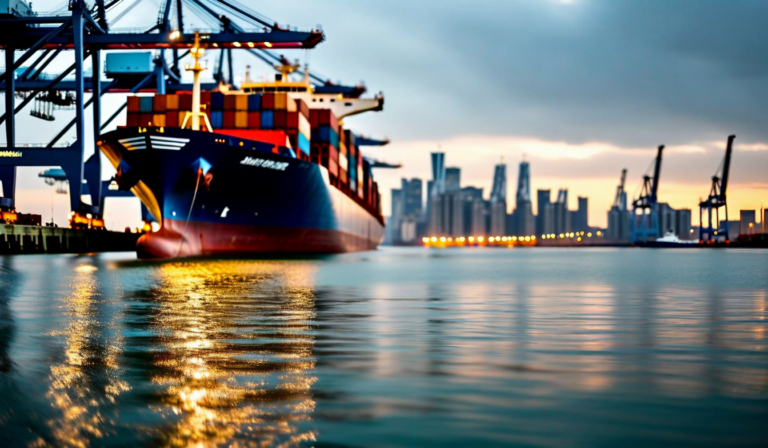
When a vessel is moored at a port berth, it doesn't simply switch off. The ship's hotel loads — HVAC systems, lighting, refrigerated cargo maintenance, crew accommodations, cargo handling equipment, and communication systems — continue drawing power. For a large container ship, the aggregate hotel load may be 1 – 3 megawatts of continuous electrical demand. Historically, this was met by running the vessel's auxiliary diesel generators, burning marine gas oil (MGO) and emitting NOx, SOx, and particulate matter directly into the port environment — and into the lungs of port workers and nearby communities.
Cold ironing (also called Alternative Maritime Power or AMP, On-Shore Power Supply or OPS) solves this by connecting the vessel to the port's electrical grid while at berth, allowing the auxiliary engines to be shut down. The term "cold ironing" dates to the era of coal-fired steam ships, when shore power allowed the ship's iron machinery to literally go cold. Today, the technology involves high-voltage cable connections, shore-side power conversion infrastructure, and vessel-side receptors that must meet international standards — and it represents one of the most impactful near-term tools for reducing port-area air quality impacts and cutting shipping's carbon footprint at berth.
The Scale of the Berth Emissions Problem
Vessels at berth account for a disproportionate share of shipping's air quality impact, particularly in urban areas. Unlike at-sea emissions dispersed across vast ocean areas, berth emissions occur in concentrated port zones surrounded by industrial facilities, logistics centers, and residential communities. Studies in major port cities — Los Angeles, Rotterdam, Shanghai, Hamburg — consistently find that port activities, including vessel auxiliary engine operation at berth, contribute significantly to local NOx and PM2.5 levels.
Under MARPOL Annex VI, vessels at berth in Emission Control Areas (ECAs) — which include North American coastal waters, the North Sea and Baltic, and several other designated zones — must use fuel with sulfur content below 0.1% (essentially LSFO or MGO). This has substantially reduced SOx emissions at berth in these areas. However, even ultra-low-sulfur diesel combustion produces NOx and CO₂, and meeting increasingly stringent port air quality regulations in jurisdictions like California (CARB requirements) and the EU requires eliminating auxiliary engine operation at berth altogether, not merely cleaning the exhaust.
The EU FuelEU Maritime regulation, in force from 2025, explicitly incentivizes shore power use by not counting electrical energy consumed from shore in the vessel's GHG intensity calculation. This is a significant regulatory signal: a vessel that connects to shore power and runs on 100% renewable electricity from the port's grid effectively achieves zero berth emissions for CII and FuelEU purposes — a compelling advantage for vessels with long average port stays.
How Shore Power Infrastructure Works
Shore power systems must solve a fundamental compatibility challenge: vessel electrical systems operate at varying voltages and frequencies (typically 440V or 6.6kV at 60Hz in US/Asia markets, or 6.6kV at 50Hz in European and Asian systems), while port electrical grids operate at national grid frequencies and voltages. The shore-side installation must include frequency converters, transformers, and switchgear to match the vessel's requirements, along with high-capacity cable management systems capable of handling currents of several hundred to several thousand amperes.
The international standard governing shore power is IEC 80005 (High Voltage Shore Connection) and IEC 80005-3 (Low Voltage Shore Connection), adopted by the IMO as the basis for MARPOL requirements. Vessels equipped for cold ironing carry the appropriate receptors and shore connection panels, typically located on the main deck in a position accessible from the berth. The connection process requires trained personnel on both vessel and shore side, and typically takes 20 – 40 minutes from first line secured to auxiliary engines secured.
The capital cost of shore power installation varies widely. A single container ship berth connection point may cost $2 – 8 million USD depending on existing grid infrastructure, cable length, and required capacity. Cruise ship terminals, where vessels may be at berth for 6 – 12 hours and have very high hotel loads (3 – 6 MW), typically see the fastest economic payback — particularly in jurisdictions where shore power use generates carbon credits or avoids local air quality penalties. Container terminals with shorter average berth times and lower individual vessel hotel loads require more careful economic analysis.
Port Analytics for Shore Power Optimization
Port analytics platforms play a critical role in maximizing the utilization and effectiveness of shore power installations. The fundamental challenge is coordination: a berth with shore power capability is only effective if the vessel arriving at that berth is equipped for connection, the shore power system is available and operational, and the vessel's schedule allows sufficient time for the connection/disconnection process relative to its total berth time.
AIS-based arrival prediction enables port operators to plan shore power allocation days in advance. By combining vessel schedule information with real-time tracking data, analytics platforms can identify which arriving vessels are equipped for shore power (this information is increasingly available in vessel databases and can be inferred from vessel class and flag state requirements), when they will arrive at the berth, and how long they are scheduled to remain. This enables proactive shore power scheduling: ensuring the infrastructure is ready, the vessel's crew is briefed on the connection procedure, and cargo operations are sequenced to accommodate the time required for connection and disconnection.
Shore power utilization reporting — tracking which vessels connected, for how long, and how much electricity was consumed — provides the data foundation for environmental reporting requirements. Under the EU ETS and various port authority environmental certification schemes (Green Marine in North America, Environmental Ship Index globally), documented shore power use generates measurable environmental credits. Accurate, automated measurement of shore power consumption, combined with the grid's renewable energy percentage, enables precise calculation of the CO₂ equivalent avoided compared to auxiliary engine operation.
The Economics of Cold Ironing: Who Benefits and How
The economics of shore power are complex because costs and benefits are distributed differently between ports and vessel operators. The port bears the capital cost of shore power infrastructure — potentially tens of millions of dollars for full terminal coverage. The vessel operator bears the cost of vessel-side equipment modifications and the operational cost of electricity consumption from the port. The benefits — reduced local air pollution, lower berth emissions, CII improvements, regulatory compliance — accrue partly to the port (compliance with local air quality regulations), partly to the operator (CII ratings, EU ETS), and largely to the community (cleaner air, public health).
Electricity pricing relative to MGO cost is the core economic variable for vessel operators. Shore power electricity in European ports typically costs $0.08 – $0.20 per kWh. MGO auxiliary engine operation typically costs $0.15 – $0.25 per kWh equivalent when fuel cost, engine wear, and maintenance are included. At current prices, shore power is frequently cheaper than auxiliary engine operation on a pure energy cost basis — and this calculation ignores the CII improvement and ETS benefit, which add further economic value.
However, not all vessel classes and trades see the same economics. Container ships with short average berth times (6 – 12 hours) and frequent port calls may find the connection overhead (time, crew cost, equipment) erodes the per-call savings. Ro-ro vessels, cruise ships, ferries, and other vessels with long regular berth times in home ports typically see the strongest case. Bulk carriers and tankers, whose berth times are often 24 – 72 hours for cargo operations, present a compelling economic case when shore power is available at their regular loading and discharge ports.
Barriers to Adoption and How Data Helps Overcome Them
Despite the clear environmental and often economic case for cold ironing, adoption remains uneven. The principal barriers are infrastructure availability (many berths globally still lack shore power), equipment compatibility (older vessels lack the receptor hardware), and operational complexity (the connection process requires training, coordination, and schedule time). Data analytics addresses each of these barriers in specific ways.
Fleet-level analytics that map which vessels in a fleet are equipped for shore power, and which ports on their regular trade routes offer compatible infrastructure, enable systematic identification of shore power utilization opportunities that are currently being missed. Many operators discover that they already have vessels capable of connecting and ports with compatible infrastructure, but no systematic process ensures the connection actually happens on every eligible port call. Automated alerts flagging upcoming berth calls where shore power connection is both technically possible and economically justified close this gap.
For fleet renewal and vessel modification decisions, analytics that quantify the CII rating improvement and ETS benefit from shore power utilization enable rigorous ROI calculations for vessel-side equipment upgrades. A vessel spending an average of 35% of its time in port on trades where shore power is available may see CII improvement of 1 – 2 rating categories from consistent shore power use — potentially the difference between a D rating requiring SEEMP remediation and a C rating that satisfies charter party requirements. When the vessel-side equipment cost is $200,000 – $500,000 and the annual benefit is $300,000+ in avoided fuel cost, ETS allowances, and charter premium, the investment case is strong.